
How to Build an Emergency Fund on a Low Income in 2026
Learning how to build an emergency fund on a low income can feel overwhelming — especially when every dollar is already accounted for before the month even begins. But the truth is, a financial safety net is not just for people with high salaries. Even setting aside a few dollars a week can be the difference between a minor setback and a financial crisis.
According to a 2024 Federal Reserve report, nearly 37% of Americans could not cover a $400 emergency expense without borrowing or selling something. For low-income households, that number climbs even higher. The good news? Building an emergency fund on a tight budget is entirely possible — with the right strategy, the right starting goal, and a little consistency.
This guide covers everything from setting a realistic savings target to finding extra money to save, choosing the best account type, and knowing exactly when to use the fund once it is built.
Table of Contents
ToggleWhat Is an Emergency Fund — and Why Does It Matter?
An emergency fund is a dedicated savings reserve set aside to cover unexpected, essential expenses — such as job loss, a medical bill, or a major car repair. It acts as a financial safety net that prevents people from going into debt every time life takes an unexpected turn. Most financial experts define it as covering three to six months of essential living costs.
Understanding the purpose of an emergency fund is the first step. It is not a general savings account, a travel fund, or a shopping buffer. Its one job is to shield against genuine financial emergencies — situations where the money is needed immediately and there is no other option.
What counts as a true financial emergency?
Not every unexpected cost qualifies. Here is a quick reference:
- Qualifies: Sudden job loss, emergency medical or dental costs, car repairs needed to get to work, urgent home repairs (e.g., broken furnace, roof leak)
- Does not qualify: A sale on flights, a new phone upgrade, holiday gifts, or a weekend trip
Keeping this distinction clear is critical — especially when the fund is small and still growing.
Emergency fund vs. savings account — what is the difference?
A regular savings account can hold emergency money, but the emergency fund vs. savings account distinction is about purpose and psychology. Keeping the emergency fund in a separate account — ideally at a different bank — removes temptation and makes it much easier to track progress toward the savings goal.
How to Build an Emergency Fund on a Low Income: Setting a Realistic Goal
Before any money moves, a clear savings goal is needed. The standard advice — save three to six months of expenses — is accurate for long-term planning. But for anyone asking how to build an emergency fund on a low income, that goal can feel paralyzing. A starter emergency fund of $500 to $1,000 is the more realistic first milestone.
The tiered goal system for low-income earners
Think of emergency fund building in three stages:
- Starter fund ($500–$1,000): Covers most minor emergencies — a flat tyre, a small medical co-pay, or a temporary utility gap.
- Intermediate fund (1 month of essential expenses): Provides a meaningful buffer against job disruption.
- Full fund (3–6 months of essential expenses): The long-term target once income and budget are more stable.
Reaching $500 first creates momentum and removes the psychological barrier of the larger number. Once that milestone is hit, rebuilding the habit is far easier than starting from zero
How to calculate the right emergency fund goa
Start by calculating monthly essential expenses — rent or mortgage, utilities, groceries, transportation, and minimum debt payments only. Exclude subscriptions, dining out, and entertainment. Multiply that number by the target months. That is the savings goal.
Create a Bare-Bones Budget Before Saving a Single Dollar
Knowing how to budget on a low income is the foundation of any savings strategy. A bare-bones budget strips spending down to the true essentials — the costs that cannot be eliminated without a major lifestyle change. This exercise reveals how much money is actually available to redirect toward savings.
Three budgeting methods compared
| Method | Best for | Savings mechanism | Difficulty |
|---|---|---|---|
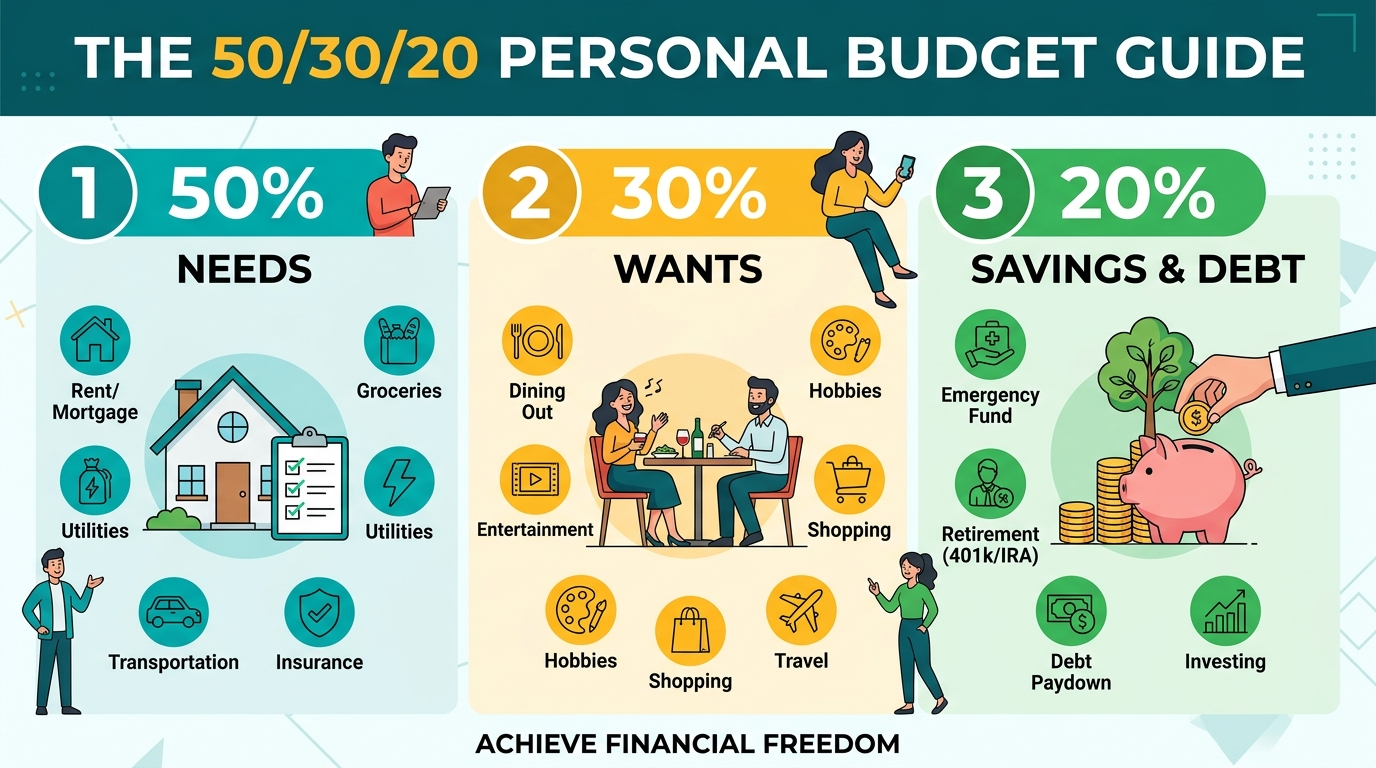
| 50/30/20 rule | Stable income | 20% to savings/debt | Easy |
| Zero-based budget | Variable income | Every dollar assigned | Moderate |
| Pay yourself first | Low willpower | Savings auto-transferred | Easy |
For most low-income earners, pay yourself first is the most effective method because it removes the decision entirely. The savings transfer happens automatically on payday — before there is a chance to spend it.
10 Practical Ways to Build an Emergency Fund on a Low Income
There is no single trick to saving on a tight budget — it is a combination of small, consistent actions. Here are ten strategies that actually work, including several that competitors consistently overlook.
- Automate savings, even $5 a week. Set up an automatic transfer to a separate account every payday. Small, consistent contributions add up to $260 a year on a $5/week plan — more than half the starter fund goal.
- Use cash-back apps and browser extensions. Apps like Rakuten, Ibotta, and Fetch Rewards return a percentage of everyday spending. Redirect every cash-back deposit directly to the emergency fund.
- Save spare change with round-up apps. Apps like Acorns round every purchase to the nearest dollar and transfer the difference. Most users save $20–$40/month without noticing.
- Cut one non-essential expense temporarily. Cancel one streaming subscription for three months. At $15–$18/month, that is up to $54 redirected to savings.
- Sell unused items. A clear-out of clothes, electronics, and furniture on Facebook Marketplace or eBay can generate a one-time $100–$500 boost toward the starter fund goal.
- Take on micro side gigs. TaskRabbit, Fiverr, DoorDash, and similar platforms offer low-barrier income. Even one shift per weekend can add $100–$200/month to savings.
- Bank all unexpected income immediately. Tax refunds, birthday cash, work bonuses, and rebates should go straight to the emergency fund before they dissolve into daily spending.
- Negotiate existing bills. A 10-minute phone call to a phone or internet provider can cut the monthly bill by $10–$30. That saving goes directly to the fund.
- Apply for government assistance programs. SNAP, LIHEAP (heating and cooling assistance), and Medicaid free up cash that was previously going to food and utilities. Many eligible households never apply.
- Use community resources. Local food banks, free clinics, and utility assistance programs reduce essential spending without requiring income changes — directly freeing up room for savings.
Where Should You Keep an Emergency Fund on a Low Income?
The best place to keep an emergency fund is somewhere safe, accessible, and separate from daily spending. This section answers one of the most searched questions for this topic: should you invest your emergency fund? The short answer is no — and here is why.
High-yield savings accounts (HYSA) — the best option for most people
A high-yield savings account emergency fund earns significantly more interest than a standard bank account — often 4–5% APY as of 2026 — while keeping money fully liquid and FDIC-insured. Online banks like Marcus by Goldman Sachs, Ally, and SoFi consistently offer the highest rates with no minimum balance requirements, which matters greatly on a low income.
Should the fund be at a different bank?
Keeping the emergency fund at a separate bank account for savings is one of the most underrated strategies in personal finance. When the money is not visible alongside daily checking, the psychological temptation to spend it drops dramatically. A small transfer delay (1–2 business days) also acts as a natural circuit breaker against impulse withdrawals
Why not invest the emergency fund?
Investing the emergency fund in stocks or ETFs exposes it to market volatility. A 20–30% market drop at exactly the moment an emergency strikes is the worst possible outcome. The purpose of this fund is stability and access — not growth. Growth comes later, after the emergency fund is fully funded.
How to Automate Savings on a Low Income — and Make It Stick
The most reliable way to save is to remove the decision entirely. How to automate savings is simpler than most people expect, and even a small automated contribution is far more powerful than a large manual one that never happens.
Setting up an automatic transfer on payday
- Step 1: Open the emergency fund account (ideally an HYSA at a separate bank).
- Step 2: Log into the primary bank’s app and navigate to ‘Transfers’ or ‘Scheduled Payments’.
- Step 3: Set a recurring transfer for payday — even $10 or $20 per pay period.
- Step 4: Label the transfer ‘Emergency Fund’ and set it to repeat automatically.
This automatic transfer to savings account runs in the background without requiring any willpower or monthly decision-making — which is exactly why it works so consistently
Best apps that automate micro-savings
Acorns: Round-up savings linked to debit spending
- Digit: Analyses income and spending patterns, then moves small safe-to-save amounts daily
- Chime: Automatically saves a percentage of each direct deposit
When to Use — and When Not to Use — an Emergency Fund
Knowing when to use an emergency fund is just as important as building one. Without clear rules, the fund can quietly drain away on expenses that feel urgent but are not true emergencies.
Situations that qualify
- Sudden job loss or significant income reduction
- Unexpected medical or dental bills not covered by insurance
- Essential car repair required to maintain employment
- Emergency home repairs — heating, plumbing, structural safety
- Unexpected travel for a family emergency
Situations that do not qualify
- A sale or promotional offer with a deadline
- A planned purchase that was not budgeted for
- Holiday or birthday spending
- A new phone, appliance, or lifestyle upgrade
For purchases that are wanted but not urgent, the better path is to create a separate sinking fund — a dedicated savings pot for planned future expenses — rather than raiding the emergency reserve
How to replenish the emergency fund after using it
After drawing from the fund, rebuilding should become the immediate top financial priority. Pause or reduce any discretionary spending temporarily and redirect that money back until the balance is restored. If possible, increase the regular automated transfer by 10–20% until the target balance is reached again.
How to Stay Motivated and Track Savings Progress
Building an emergency fund is a long game, and motivation tends to fade long before the goal is reached. How to stay motivated to save money on a low income often comes down to making progress visible and celebrating milestones — even small ones.
Visual savings trackers that work
- Thermometer chart: Colour in a segment each time $25 or $50 is saved. Watching the visual fill up is a powerful psychological reward.
- Savings app dashboards: Apps like Qapital, YNAB, and even Google Sheets templates show real-time progress toward a defined goal.
- Printable savings trackers: A physical chart on the fridge keeps the goal visible every single day (see downloadable tracker below).
Milestone rewards that do not derail the budget
At $250, $500, and $1,000 milestones, a small reward — a favourite meal at home, a free afternoon off, or a low-cost treat — reinforces positive behaviour without undoing progress. The savings milestone itself is the win; the reward is a signal to the brain that the effort was worth it.
Dealing with setbacks and starting over
Setbacks are not failures — they are the reason the fund exists. When an emergency forces a withdrawal, the first emotion is often discouragement. The productive response is to reset the contribution schedule and treat the rebuild as Phase Two, not as starting from scratch. Every dollar replaced is proof the system is working exactly as designed.
What to Do After the Emergency Fund Is Fully Funded
Reaching full funding is a genuine financial milestone. Once that three-to-six-month cushion is in place, the question becomes: what to do after building an emergency fund? This is where the financial momentum built during the saving phase becomes the foundation for long-term wealth.
Redirect savings toward debt payoff or investing
The most common next step is a two-track approach: continue a small automatic transfer to maintain the emergency fund (replacing inflation erosion) and redirect the bulk of freed-up savings toward either high-interest debt payoff or long-term investing. Many financial planners recommend tackling any debt above 6–7% interest before investing, since the guaranteed return from eliminating that interest typically outpaces market returns.
When to increase the emergency fund
Certain life changes warrant a larger buffer: having a child, switching to self-employment, taking on a mortgage, or supporting a dependent. When income becomes less predictable or expenses rise, the fund should grow accordingly.
Frequently Asked Questions
Q: How do I build an emergency fund if I live paycheck to paycheck?
Start with the smallest possible automated transfer — even $5 or $10 per week. The goal is to establish the habit first and increase the amount gradually. Simultaneously, review eligibility for government assistance programs like SNAP or LIHEAP, which can free up cash that is currently going to food and utilities.
Q: Is $1,000 enough for an emergency fund?
A $1,000 starter emergency fund is a strong first milestone and covers the majority of common financial emergencies — car repairs, minor medical bills, or a brief income gap. However, the long-term goal should be three to six months of essential expenses, which for most low-income households is between $4,000 and $12,000.
Q: Where is the best place to keep an emergency fund?
A high-yield savings account (HYSA) at an online bank offers the best combination of safety (FDIC-insured), liquidity (accessible within 1–2 business days), and interest (typically 4–5% APY in 2026). Keeping it at a separate bank from the primary checking account adds a psychological barrier that helps prevent impulse withdrawals.
Q: Should I pay off debt or build an emergency fund first?
Build the starter fund ($500–$1,000) first, even while carrying high-interest debt. Without any emergency savings, an unexpected expense goes straight onto the credit card, worsening the debt situation. Once the starter fund is in place, redirect resources aggressively toward high-interest debt, then build out the full emergency fund.
Q: How long does it take to build an emergency fund on a low income?
At a $50/month savings rate, reaching a $1,000 starter fund takes about 20 months. At $100/month, it takes 10 months. Adding one-time windfalls — tax refunds, cash gifts, gig income — significantly accelerates the timeline. Using round-up apps and cash-back rewards alongside a fixed monthly contribution is the fastest approach for most low-income households.
Final Thoughts
Knowing how to build an emergency fund on a low income in 2026 is not about making dramatic sacrifices — it is about making consistent, small decisions that add up over time. Starting with a $500 goal, automating even a tiny weekly transfer, and using every available resource — from cash-back apps to government assistance programs — can move someone from financial fragility to financial stability faster than most people expect.
The most important step is the first one: open a separate high-yield savings account today and set up a $5 or $10 automatic transfer for next payday. Everything else builds from there.